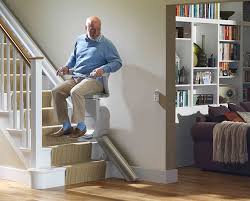
A Step-by-Step Guide to Stairlift Installation
Installing a stairlift can be a life-changing upgrade for individuals with mobility challenges, allowing them to safely and comfortably navigate their homes. While professional installation is recommended, understanding the process helps homeowners feel more confident and prepared. Here’s a step-by-step guide to stairlift installation.
Initial Assessment and Measurement
The process begins with an in-home assessment. A trained technician evaluates the staircase, its length, width, and whether it’s straight or curved. They also assess the user’s mobility needs, seating preferences, and safety concerns. Accurate measurements are crucial for designing a stairlift that fits securely and functions efficiently.
Choosing the Right Stairlift
Based on the assessment, the right stairlift model is selected. Straight stairlifts are suitable for simple staircases, while curved models are custom-built for staircases with turns, landings, or unusual angles. Other considerations include weight capacity, seat style, armrest control, and additional safety features like seat belts and swivel seats.
Preparing the Staircase
Before installation, the staircase must be clear of obstacles. No structural modifications are typically needed, as stairlifts are mounted to the stair treads—not the wall. This means minimal disruption to the home’s structure.
Installing the Track
The track is the foundation of the stairlift. For straight stairlifts, the track comes pre-fabricated and is cut to match the staircase length. For curved stairlifts, the track is custom-built and may take longer to manufacture. The track is securely fixed to the stairs using brackets, ensuring stability and alignment.
Mounting the Stairlift Carriage and Seat
Once the track is in place, the carriage unit—housing the motor and drive system—is mounted on the track. The seat, armrests, and footrest are then attached to the carriage. These components are adjusted for user comfort and safety, ensuring easy access and proper height alignment.
Wiring and Power Supply
Stairlifts operate on rechargeable batteries powered by a standard wall outlet. During installation, the technician connects the stairlift to a nearby power source, installs charging points at the top or bottom (or both) of the track, and ensures all electrical components function correctly.
Testing and Safety Checks
After installation, the stairlift is thoroughly tested. This includes checking the ride smoothness, responsiveness of controls, safety sensors, and battery operation. Emergency stop buttons, seat swivels, and safety belts are also inspected for functionality.
User Training and Final Handover
Finally, the installer provides a demonstration and trains the user on how to operate the stairlift safely. Maintenance tips and contact details for service or support are shared before the job is complete.
A properly installed stairlift can dramatically improve independence and quality of life for individuals with limited mobility, offering safe and effortless movement between floors.



2 Comments
s9game
Been playing s9game for a couple of days now and it’s really grown on me. It’s engaging. Check it out here s9game
35phfunlogin
35phfunlogin, what a name! I am curious to see what this is all about. So fun get me in. Check it out at 35phfunlogin.